Review: Floral Elements 2 Designs for Business Merch
As an embroidery designer who spends most of my days digitizing logos and prepping files for commercial production, I am always skeptical of stock machine embroidery design packs. Too often, they look pretty on a screen but fail miserably when stitched out on a curved cap or a textured tote bag. However, after taking a close look at Floral Elements 2 Designs, I see immediate potential for small business owners looking to elevate their branded merchandise without the cost of custom digitizing.
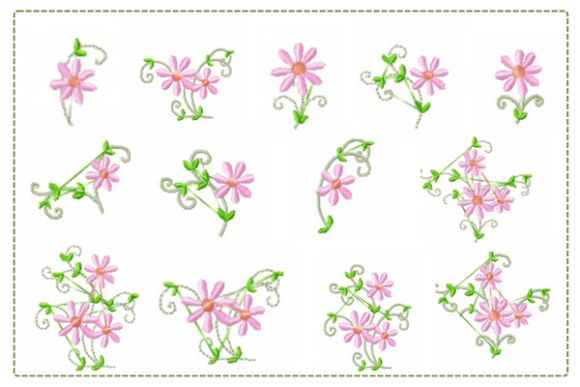
This collection is categorized under Single Flowers and falls squarely into the Embroidery product type. The description highlights a "floral set of digital machine embroidery designs for home decor and clothing embroidery," specifically mentioning flowers to decorate gifts and items for morning coffee, tea, or cocoa. While this sounds domestic at first glance, my professional eye sees something different: a versatile asset library for boutique branding, café uniforms, and handmade product labels.
First Impressions: Aesthetic and Brand Personality
The first thing that strikes me about Floral Elements 2 Designs is its versatility in tone. Based on the description focusing on morning beverages and gifts, these designs likely carry a warm, inviting, and slightly rustic aesthetic. For a local bakery, a florist, or a cozy coffee shop, this visual language is gold. It doesn't scream "corporate"; instead, it whispers "handmade" and "artisanal."
In the world of brand identity, consistency is key. If your business sells organic teas, custom ceramics, or pet accessories, using a cohesive floral motif across your small business merch creates instant recognition. These designs feel friendly and approachable, which is exactly what you want on a customer-facing item like an apron or a gift bag. They offer a premium, decorative touch that can transform a plain textile into a finished product that feels curated rather than mass-produced.
Real-World Applications for Small Business Merch
Let's move beyond theory and talk about where these files actually work in a commercial setting. The description mentions "clothing embroidery" and "gifts," which opens up several lucrative avenues for apparel decorators and Etsy sellers.
- Staff Uniforms and Aprons: For a café or boutique, an apron embroidery featuring one of these single flowers on the chest pocket adds a touch of elegance. It breaks up the monotony of a solid-color uniform and reinforces the shop's theme.
- Custom Apparel: These designs are perfect for sleeve details on work shirts or as a subtle accent on the cuff of a denim jacket. They are small enough to be understated but detailed enough to catch the eye.
- Branded Patches: This is perhaps the strongest use case. An embroidered patch made from these files can be sewn onto canvas tote bags, backpacks, or even pet bandanas. Patches allow you to apply the design to items that are difficult to hoop directly.
- Cap Embroidery: A single floral element works beautifully on the side panel of a dad hat or trucker cap. It offers a modern alternative to the traditional centered logo.
- Tote Bag Design: For retail shops, a simple floral mark near the bottom corner of a canvas tote looks chic and professional, serving as a walking advertisement for your brand.
Technical Considerations and Production Challenges
While the artistic potential is high, we must address the technical realities of running these files on industrial or home machines. As a designer, I have to warn you about a few specific areas where Floral Elements 2 Designs might need careful handling.
First, consider the stitch density. Floral designs often rely on satin stitches for petals and leaves. If the density is too high, the thread can bunch up, especially on stretchy fabrics or curved surfaces like a cap embroidery project. Conversely, if the density is too low, the fabric might show through, ruining the premium look. Always run a test stitch-out on a scrap piece of your actual production fabric.
Second, watch out for fabric texture. The description mentions "home decor," which implies these might be optimized for stable cottons or linens. If you plan to embroider these on a fuzzy towel, a thick fleece, or a slippery performance polyester, the results may vary. Detailed outlines can get lost on high-pile fabrics. For dark uniforms, ensure the thread colors provided in the palette have enough contrast, or be prepared to manually adjust the color sequence in your embroidery software.
Finally, size matters. If you intend to shrink these down for a tiny product label or a small patch, check the detail level. Fine lines in a floral design can merge together if the hoop size limits force you to reduce the scale too much. Verify that the design remains legible at your intended dimensions before committing to a large production run.
Impact on Customer Trust and Perceived Value
Why go through the trouble of embroidering instead of just printing? The answer lies in perceived value. An embroidered logo or design signals durability and quality. When a customer receives a gift bag with a stitched floral element, or wears an apron with a raised texture, they subconsciously assign a higher value to your brand.
Using Floral Elements 2 Designs helps build customer trust. It shows that you care about the details of your presentation. In a market saturated with generic print-on-demand items, offering a handmade product with genuine texture sets you apart. It enhances buyer engagement because the item feels special, tactile, and unique to your business.
Practical Designer Notes for Implementation
Before you load these files into your machine for a client order, follow this checklist to ensure professional results:
- Test in Black and White: Convert the design to a single color in your software to check for spacing issues and clarity without the distraction of thread colors.
- Check Small Patch Viability: Stitch a sample at the smallest size you intend to use to ensure no details collapse.
- Review Thread Contrast: Ensure your chosen thread shades pop against the garment color, especially for dark uniforms.
- Inspect Spacing: Look for areas where stitches might overlap excessively or where jump stitches could be problematic.
- Confirm Hoop Size: Make sure the design fits within your available hoop, especially if working with tubular items like caps or sleeves.
- Test on Real Fabric: Never skip a run-off on the exact material you will be selling or wearing.
- Use Proper Stabilizer: Match your stabilizer to the fabric weight; florals often need good cut-away support to prevent distortion.
- Create a Printable Mockup: Show your client a digital visualization of the design on their product before stitching.
- Compare Design Assets: See how these flowers look alongside your existing logo to ensure visual consistency.
- Confirm Commercial Licensing: The description mentions "digital machine embroidery designs," but always verify the specific license terms to ensure you are allowed to use them for commercial embroidery and resale.
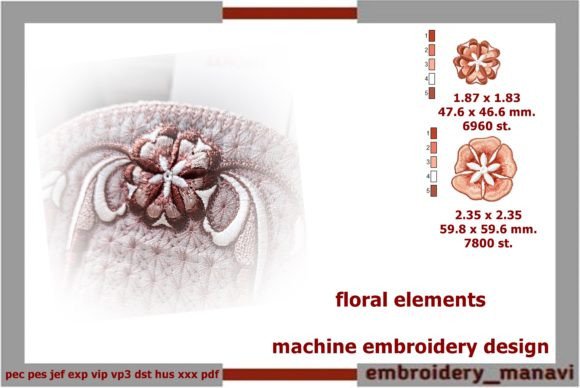
The product description does not specify exact stitch counts, file formats, or precise hoop requirements. Therefore, it is crucial to download the preview or specification sheet and check those details before production begins. Knowing whether you are getting PES, DST, or EXP files, and understanding the stitch count, will help you estimate production time and thread usage accurately.
In conclusion, Floral Elements 2 Designs offers a charming and practical solution for businesses wanting to add a touch of nature-inspired elegance to their merchandise. Whether you are creating an embroidered patch for a tote bag or detailing a barista's apron, these files provide a strong foundation for building a recognizable and professional brand identity. With proper testing and attention to fabric compatibility, they can become a staple in your library of design assets.