4th of July Gnome Flag: A Pro Review for Business Merch
As an embroidery designer who spends most of my days digitizing logos and prepping files for commercial production, I approach every new machine embroidery design with a critical eye. It is not just about whether a image looks cute on a screen; it is about how that digital embroidery file translates into a tangible finished product that represents a brand. Today, I am reviewing the 4th of July Gnome Flag, a design positioned squarely in the Independence Day category. My goal is to evaluate its potential for small business owners, boutique operators, and apparel decorators looking to expand their seasonal merchandise lines.
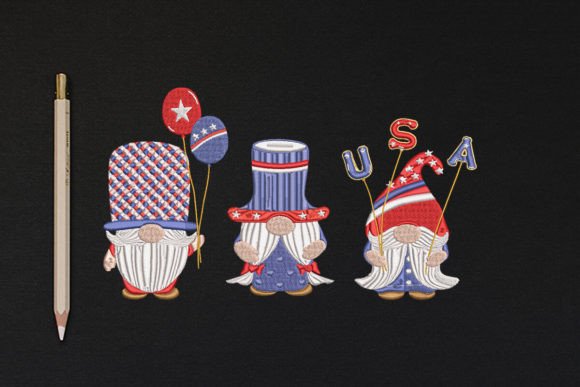
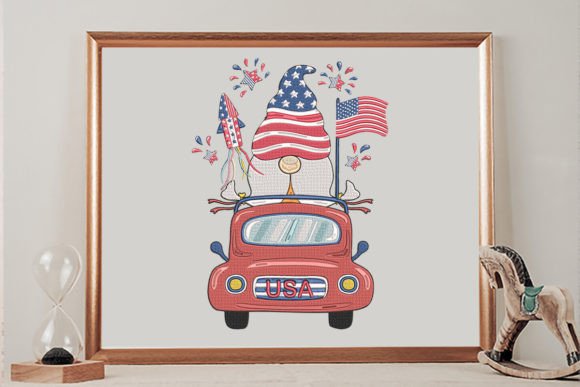
Upon first inspection, the 4th of July Gnome Flag exudes a specific visual personality. It feels undeniably friendly and playful, leaning heavily into the whimsical "garden gnome" trend that has taken the crafting world by storm. However, for a business owner, the question is whether this playfulness undermines professionalism. In my assessment, this design strikes a balance that works well for lifestyle brands, bakeries, florists, and creative studios. It does not scream "corporate," but it does scream "community." The aesthetic is rustic yet polished, making it an excellent candidate for handmade product lines where the human touch is a selling point. The charm lies in its ability to add a touch of patriotic pride without feeling aggressive or overly militaristic, which is often a pitfall of holiday-themed graphics.
Real-World Application for Small Business Merch
Let us move beyond theory and discuss how the 4th of July Gnome Flag performs in actual commercial embroidery scenarios. Imagine a local coffee shop wanting to release a limited-run series of staff aprons for July. This design would serve perfectly as a chest accent or a pocket detail. Because gnomes are associated with luck and guarding treasures, placing this on an apron subtly suggests that the staff are guardians of quality coffee. Similarly, for a pet brand or a boutique selling summer accessories, this design translates beautifully onto custom apparel like tote bags. The whimsical nature of the gnome pairs exceptionally well with canvas textures, creating a tote bag design that customers actually want to carry around town, effectively turning them into walking billboards for your shop.
For Etsy sellers and craft business owners, the versatility of this asset is a major plus. It can be scaled down to create a cohesive line of embroidered patch products. These patches can be sold as standalone items for customers to iron or sew onto their own denim jackets, or they can be used as value-adds for high-ticket items. For instance, a handmade quilt seller could include a small 4th of July Gnome Flag patch as a branded label on their Independence Day collection. This elevates the perceived value of the item, signaling attention to detail. Furthermore, for event merch creators, this design is ideal for staff uniforms at local parades or community festivals. It creates a unified look that is festive but remains distinct from generic, mass-produced party supplies.
Technical Considerations and Placement Strategy
While the artistic merit is clear, we must address the technical execution. When deploying the 4th of July Gnome Flag, placement is everything. On curved surfaces like baseball caps, the density of the design becomes critical. Cap embroidery requires careful handling of stitch count to prevent puckering, especially if the gnome features a detailed hat or beard. If the design has high stitch density in small areas, I recommend running a test on a scrap piece of the exact cap material you intend to use. The structure of a cap front is unforgiving; if the columns of stitching are too close together, the fabric will pull, distorting the gnome's face.
Another area requiring caution is the size of the application. If you are using this as a tiny logo on a polo shirt sleeve or a small product tag, you must verify the legibility of the details. Tiny lettering or fine outlines can disappear if the design is reduced too far. Before committing to a large production run, create a printable mockup at the actual size to check for clarity. Additionally, consider the fabric texture. This design likely relies on specific thread colors to define the red, white, and blue elements. On textured fabrics like terry cloth or heavy canvas, some of the finer definition might get lost. Conversely, on smooth performance fabrics, the stitches may sit too high if the underlay is not sufficient. Always pair your production with the correct stabilizer to ensure the design remains flat and durable through multiple wash cycles.
Impact on Brand Identity and Customer Trust
Integrating the 4th of July Gnome Flag into your inventory does more than just add a seasonal item; it influences your brand identity. Consistency is key to building customer trust. If your brand voice is warm, approachable, and family-oriented, this design reinforces those values visually. It tells your customers that you celebrate traditions and enjoy a bit of fun. However, if your brand is strictly minimalist or ultra-luxury, this whimsical element might clash. It is essential to compare this design beside your other design assets to ensure visual consistency. When used correctly, it enhances product value by offering something unique that cannot be found in big-box stores. Customers engage more deeply with brands that show personality, and a well-executed embroidered gnome signals that care went into the creation of the merchandise.
Professional Designer Notes for Production
Before you load this file into your machine for a client order, there are several practical steps you should take to guarantee success. First, test the design in black and white or grayscale. This helps you understand the contrast and shape definition without the distraction of color. If the design relies entirely on color changes to define the gnome's features, it may not hold up if a customer requests a monochromatic version later. Second, confirm the hoop size requirements. Ensure your machine frame can accommodate the design dimensions without needing to re-hoop, which can lead to alignment issues.
It is also vital to inspect the spacing between elements. In embroidery, negative space is just as important as the stitches themselves. Ensure there is enough breathing room between the gnome and the flag to prevent thread buildup. Finally, and perhaps most importantly, confirm the commercial licensing terms. While many designers purchase files for personal use, applying the 4th of July Gnome Flag to goods you intend to sell requires a commercial license. Do not assume the standard download includes this right; always check the specific terms provided with the embroidery file. By taking these precautions, you ensure that your final output is not only beautiful but also professionally viable for your small business.